On 20 October, researchers from the Secanje.nl team visited the grave of the Unknown Serbian Prisoner of War on the cemetery of Nieuw-Beerta, in the north-eastern corner of the Netherlands, to pay their respects and honour his memory.
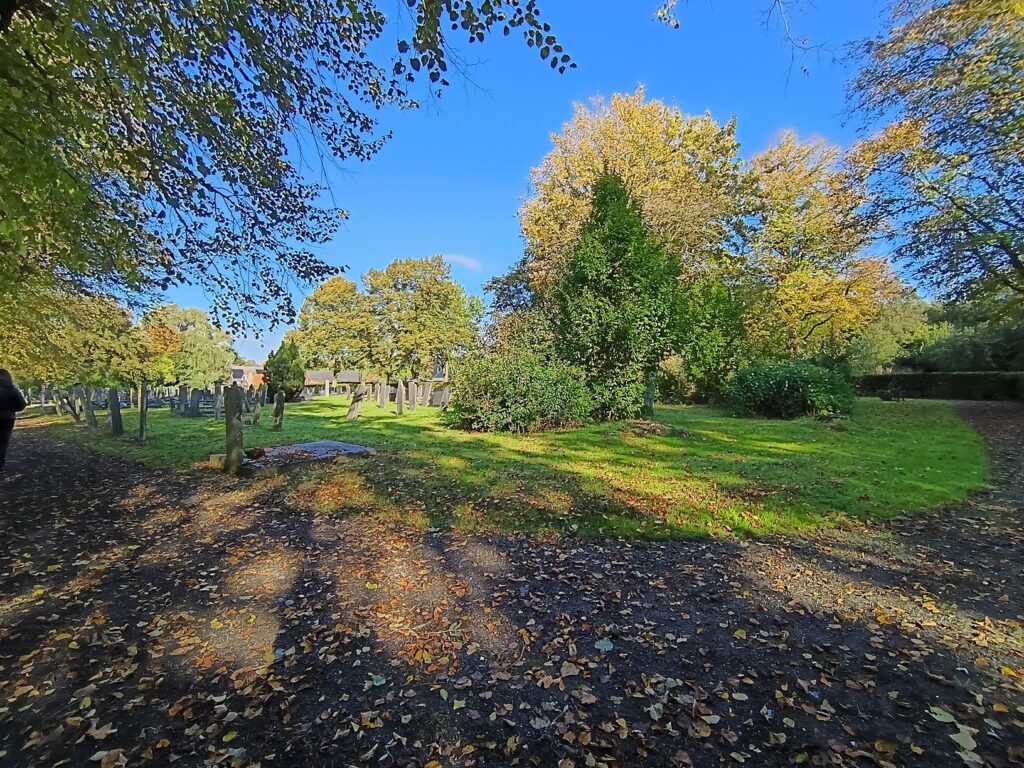
Graveyard with the unknown POW in Nieuw Beerta.
According to contemporary accounts the unknown soldier is believed to have been a Serbian prisoner of war who escaped from Germany during the First World War. He drowned on 9 July 1917 near Nieuw-Statenzijl in the River Westerwoldse Aa, which forms part of the border between Germany and the Netherlands.
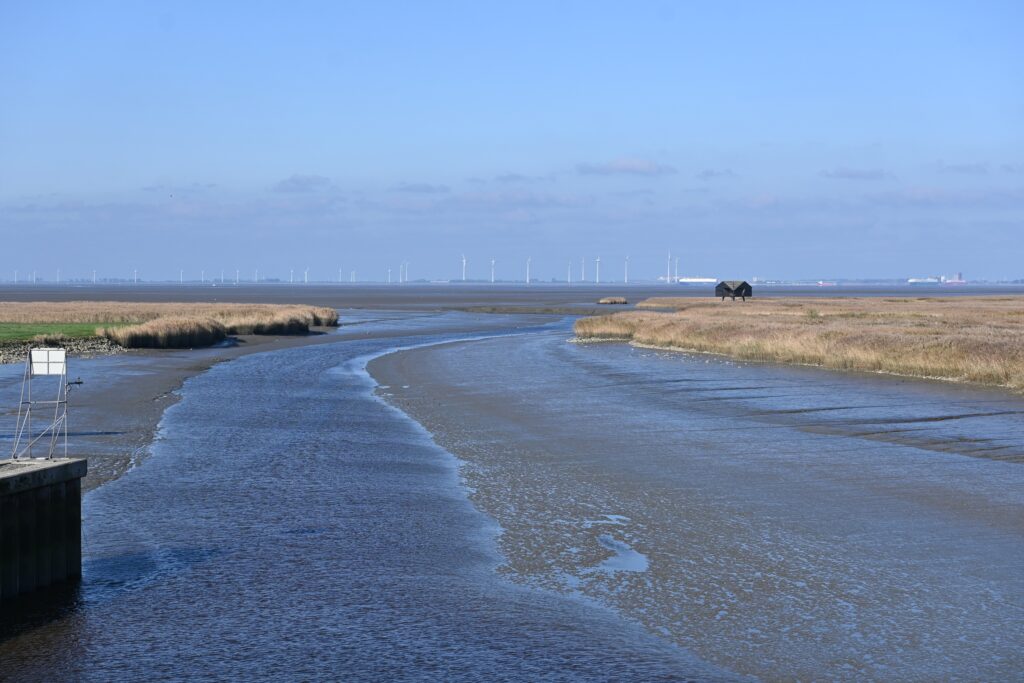
The Dutch (left) – German (right) border at Nieuwe-Statenzijl.
According to the official Dutch death certificate issued on 10 July 1917, “an unknown person, possibly of Serbian descent”, died at approximately nine o’clock.
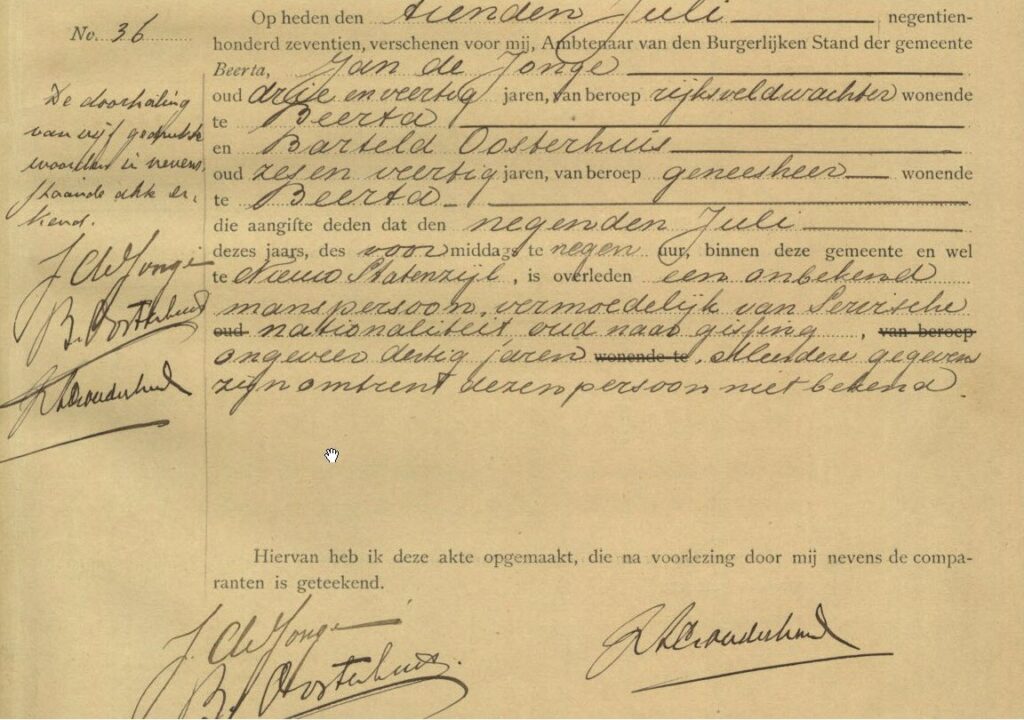
Official Dutch death certificate 10/07/1917.
Dutch newspapers also reported on the tragic incident. On 11 July 1917, the local newspaper Winschoter Courant noted that the unfortunate Serbian refugee had died, but that his watch was still ticking. He had escaped from the German prisoner-of-war camp at Soltau, situated approximately 200 kilometres from the Dutch-German border.
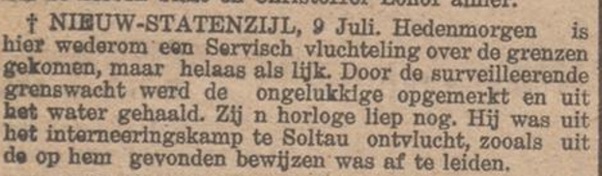
Winschoter Courant, 11 July 1917.
He was subsequently buried in Nieuw-Beerta, where his grave remains to this day. A year later, in 1918, a commemorative monument was erected on the grave by the mayor of Beerta, who described him as a Serbian prisoner of war who found his death “on the shores of the land of freedom” while fleeing captivity. The event was also reported by several Dutch newspapers, some of which mentioned the name “Muskovkov” in connection with the deceased soldier.
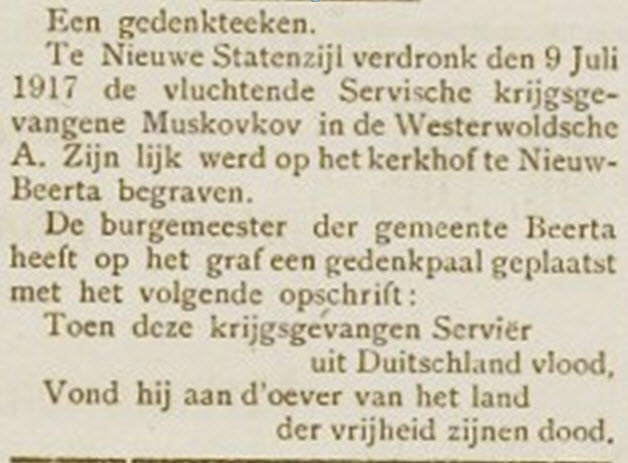
Nieuwsblad van het Noorden from 21th August 1918.
Although definitive proof of the soldier’s identity has not been found, contemporary sources and circumstances strongly indicate that he was of Serbian origin. During that period, many prisoners of war of the Entente escaped from the camps or farms where they worked and attempted to reach neutral Dutch territory. As large numbers of escaped prisoners of war crossed into neutral Dutch territory, Dutch border authorities became increasingly familiar with their various nationalities and were generally able to determine their country of origin.
During and after the First World War, many prisoners of war passed through the Netherlands on their way home. Among them were Serbian prisoners transferred from German camps to Dutch transit camps. The influenza pandemic of 1918-1919 claimed the lives of Serbian prisoners on Dutch soil.
A monument was later erected in Garderen, where 21 Serbian prisoners died during the influenza pandemic. The names of Serbian prisoners who died elsewhere in the Netherlands were subsequently added to the memorial.
In 1938, the remains of 88 Serbian prisoners who had died in the Netherlands were exhumed and reinterred in Jindřichovice, then part of Czechoslovakia, where they found their final resting place. Two Serbian graves had previously been dealt with separately and therefore remained in the Netherlands. The grave in Nieuw-Beerta, however, appears to have been overlooked and therefore remains in its original location.
On 20 October, researchers Tanja Vendrig, Fabian Vendrig and John Stienen visited the unmarked grave of the Unknown Serbian Prisoner of War in Nieuw-Beerta. They symbolically marked the grave and paid tribute to his memory.
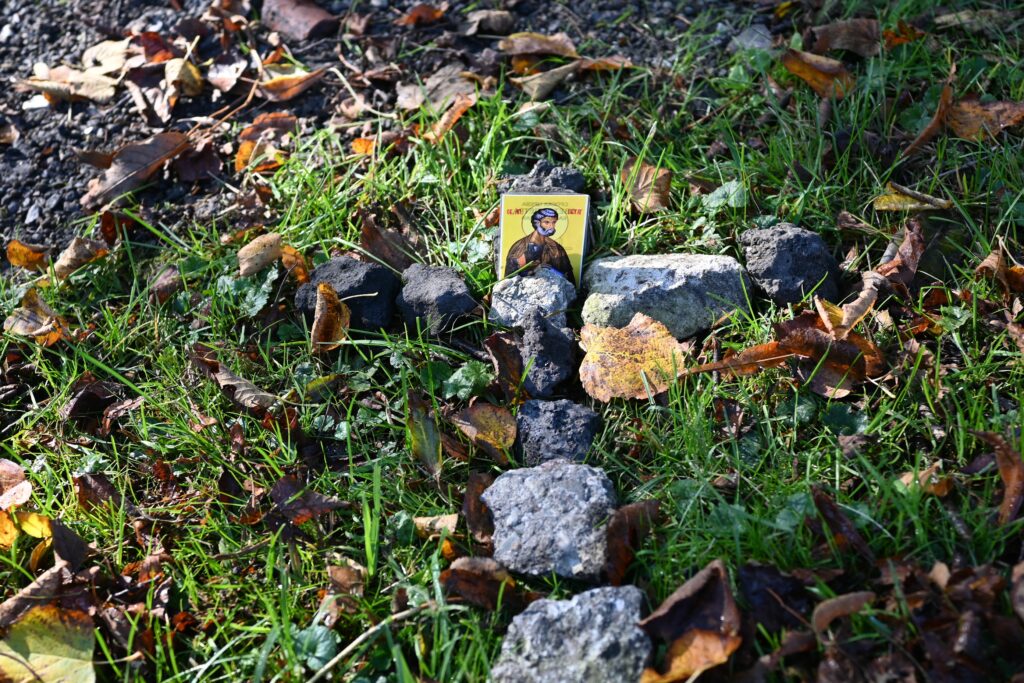
Nieuw Beerta, at the unmarked grave, 20/10/2026
The annual commemoration of Serbian prisoners of war in the Netherlands takes place each year at the monument in Garderen. The ceremony brings together the Serbian diaspora in the Netherlands, representatives of Serbian and Dutch organisations, and all those committed to preserving the memory of the Serbian victims of the First World War.
This year marked the twentieth anniversary of the commemoration. Among those attending were the Serbian Ambassador, the Bishop of Western Europe of the Serbian Orthodox Church and the Mayor of Barneveld.
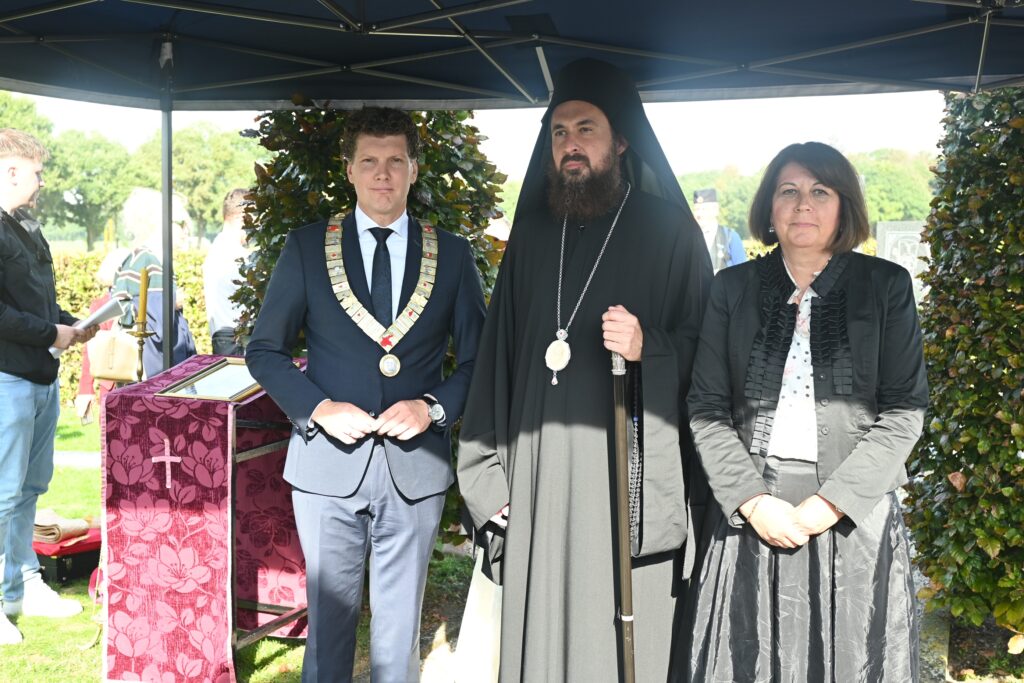
On 3 October 2026, the Mayor of Barneveld, Mr J. van der Tak, Bishop Justin of the Serbian Orthodox Church, and the Serbian Ambassador to the Netherlands, Ms Jovicević, attended the commemoration.
Team secanje.nl : John Stienen, Fabian & Tanja Vendrig, Nieuwe Statenzijl 20 October 2026
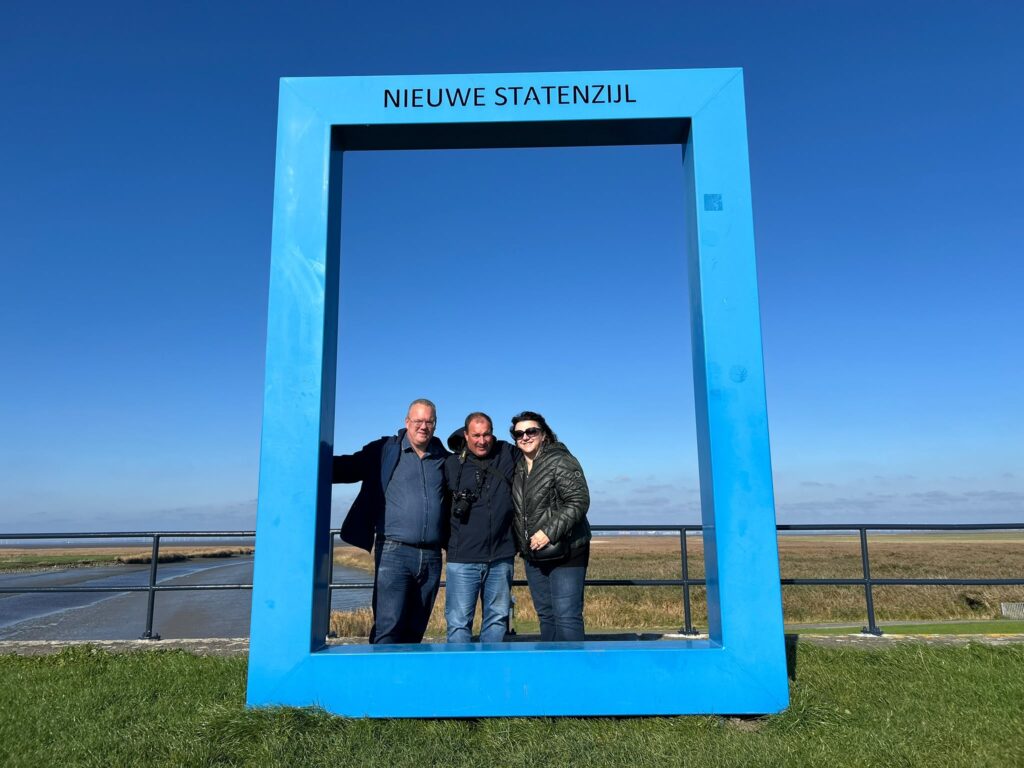
A small reel was also created with the story:


